Chapters
On this page
Introduction
A news feed system displays a constantly updating list of posts (status updates, photos, videos, and links) from a user’s connections. Examples include Facebook’s news feed, Instagram’s feed, and Twitter’s timeline. This chapter explores the design of a scalable news feed system.
Step 1: Understanding the Problem
Requirements
- Platform: The system supports both web and mobile apps.
- Features:
- Users can publish posts.
- Users can view posts from friends in their news feed.
- Sorting: Feeds are sorted in reverse chronological order for simplicity.
- Scale:
- Users can have up to 5,000 friends.
- 10 million daily active users (DAU).
- Feeds may include text, images, and videos.
Step 2: High-Level Design
Overview
The design includes two main flows:
- Feed Publishing: A user publishes a post, which is written to the database and propagated to their friends’ feeds.
- News Feed Building: A user retrieves their news feed by aggregating posts from friends in reverse chronological order.
News Feed APIs
-
Feed Publishing API:
- Endpoint:
POST /v1/me/feed - Params:
content(post text) andauth_token(authentication).
- Endpoint:
-
News Feed Retrieval API:
- Endpoint:
GET /v1/me/feed - Params:
auth_token(authentication).
- Endpoint:
Feed Publishing
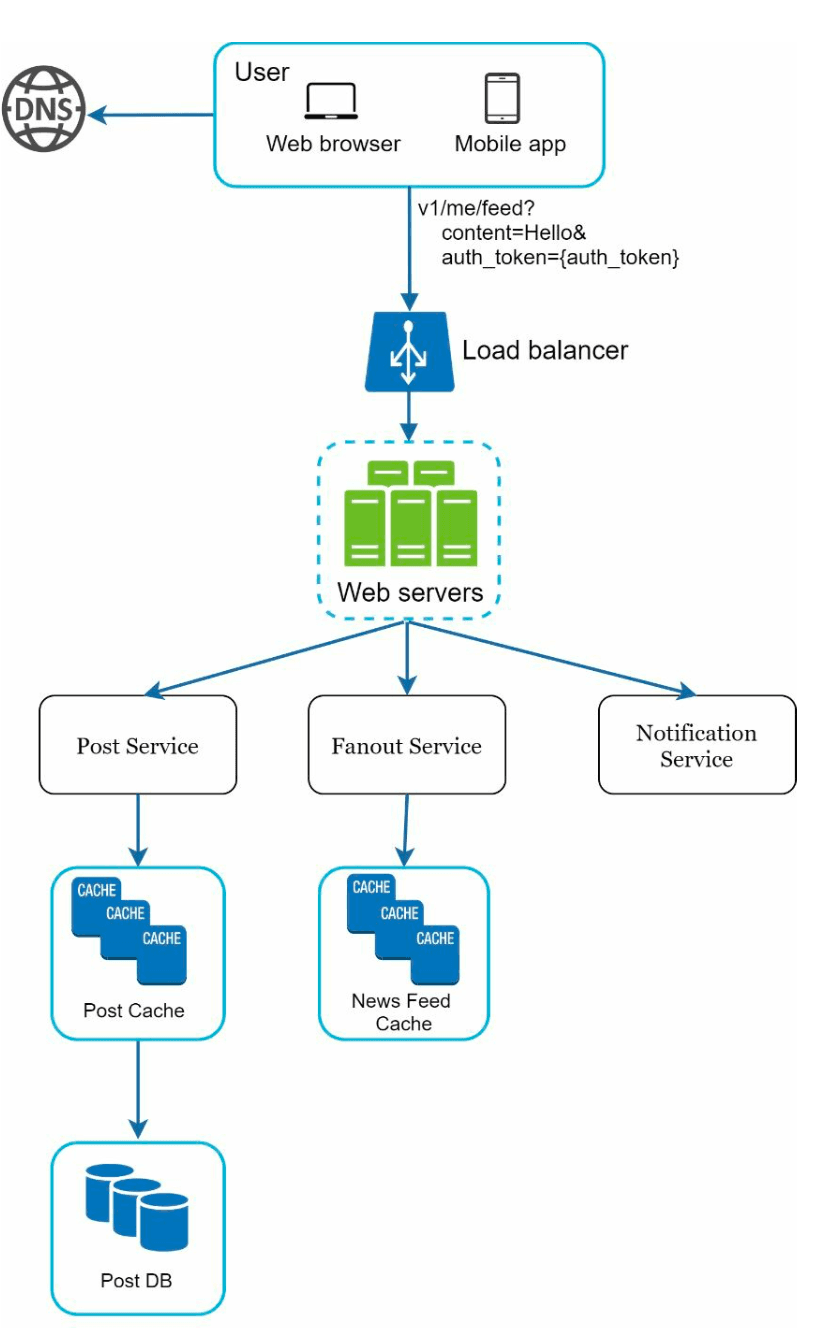
- User Interaction: The user publishes a post via the feed publishing API.
- Load Balancer: Distributes traffic to web servers.
- Web Servers: Authenticate requests and redirect to services.
- Post Service: Stores the post in the database and cache.
- Fanout Service: Propagates the post to friends’ news feeds in the cache.
- Notification Service: Sends notifications to friends.
News Feed Building
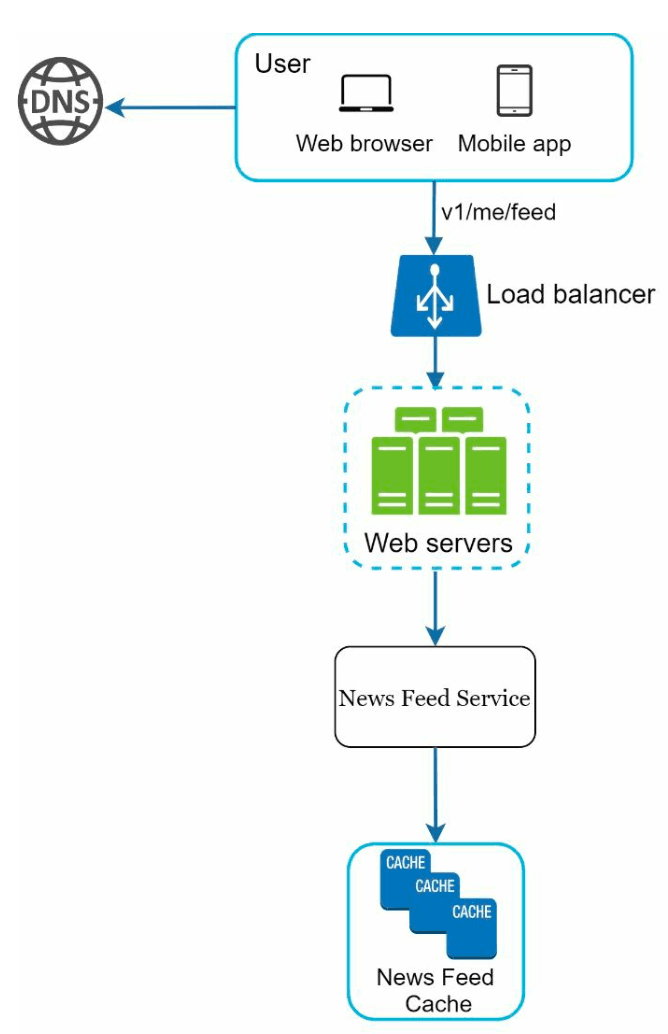
- User Interaction: The user requests their news feed via the retrieval API.
- Load Balancer: Distributes traffic to web servers.
- Web Servers: Forward requests to the news feed service.
- News Feed Service: Fetches post IDs from the news feed cache and retrieves complete post details from the database or cache.
Step 3: Design Deep Dive
Feed Publishing Deep Dive
-
Web Servers:
- Authenticate users using
auth_token. - Enforce rate limits to prevent spam.
- Authenticate users using
-
Fanout Service:
-
Fanout on Write: Push posts to friends’ feeds at write time.
- Pros: Real-time updates, fast feed retrieval.
- Cons: Resource-intensive for users with many friends.
-
Fanout on Read: Pull posts at read time.
- Pros: Efficient for inactive users.
- Cons: Slower feed retrieval.
-
Hybrid Approach: Use a push model for most users and a pull model for high-connection users (e.g., celebrities).
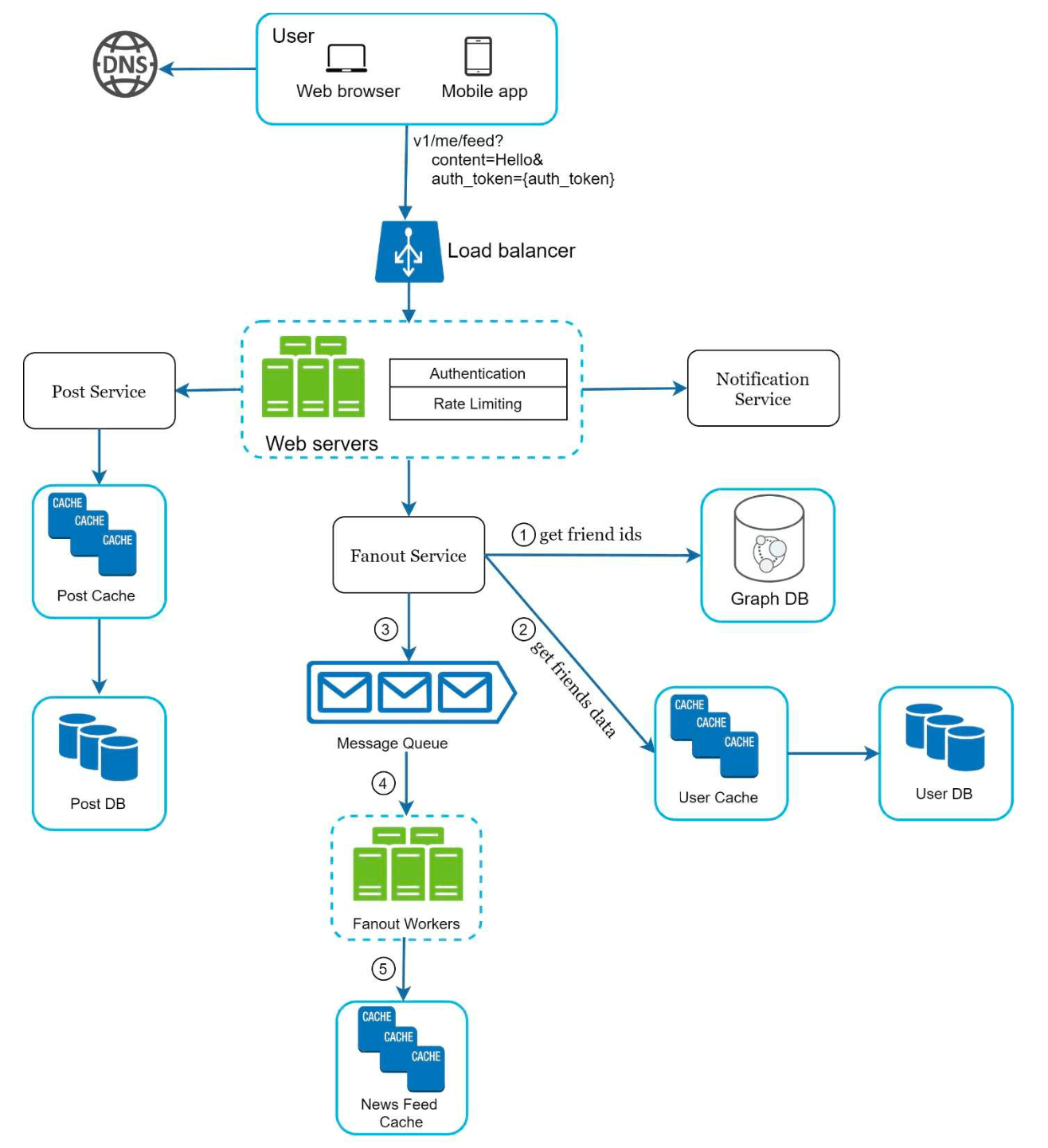
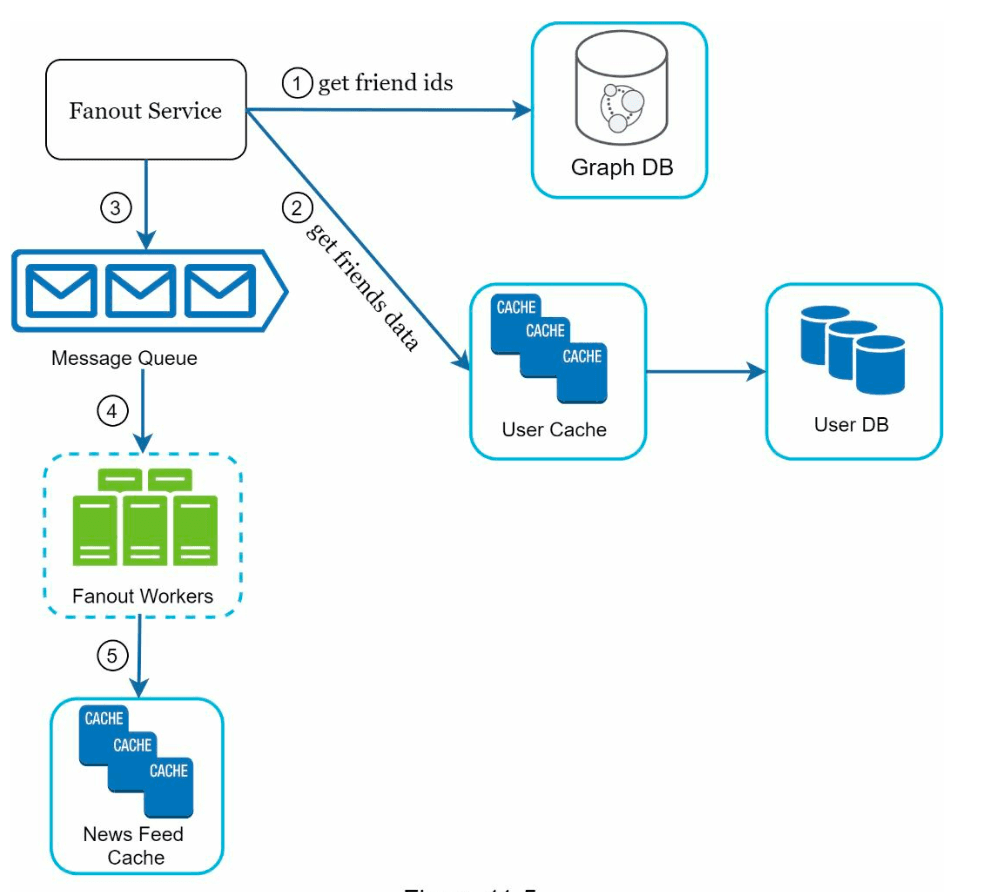
The fanout service works as following:
- Fetch Friend IDs: Retrieve the friend list from a graph database.
- Filter Friends from Cache: Access user settings in the cache to exclude certain friends (e.g., muted friends or selective sharing preferences).
- Send to Message Queue: Send the filtered friend list along with the new post ID to a message queue for processing.
- Fanout Workers: Workers retrieve data from the message queue and update the news feed cache. The cache stores
<post_id, user_id>mappings instead of full user and post objects to save memory. - Store in News Feed Cache: Append new post IDs to the friends’ news feed cache. A configurable limit ensures that only recent posts are stored, as most users focus on the latest content, keeping cache memory consumption manageable.
-
News Feed Retrieval Deep Dive
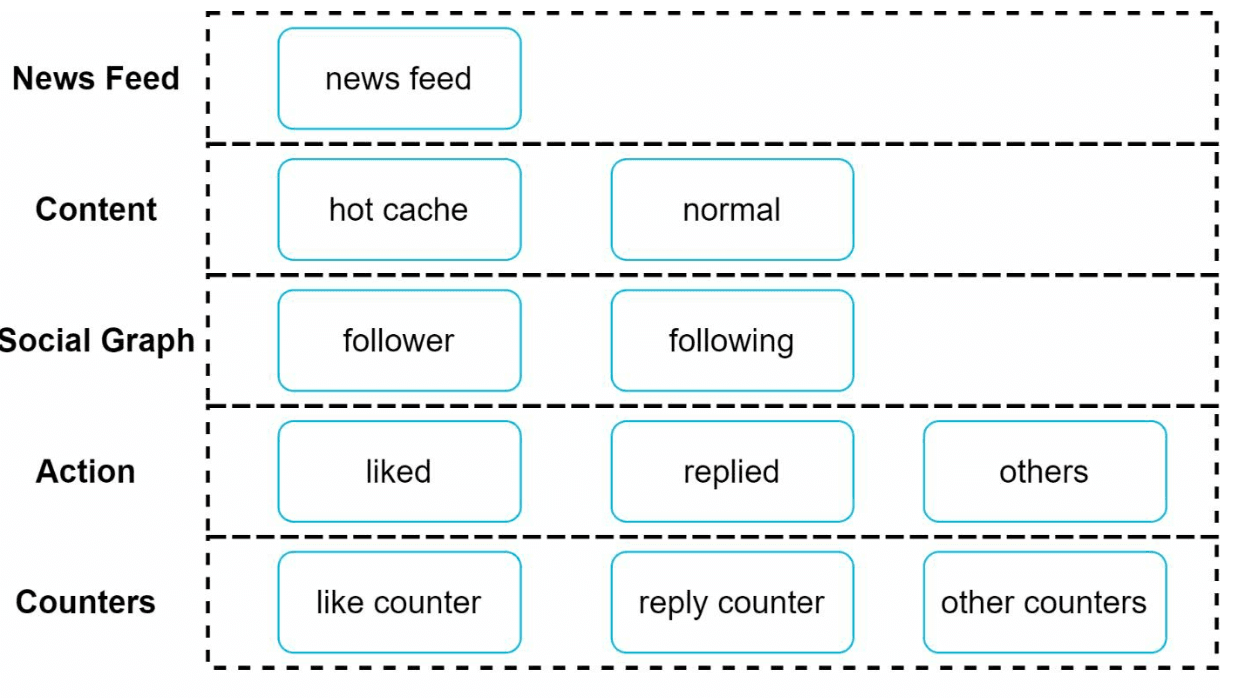
Cache Architecture
The cache is divided into five layers:
- News Feed Cache: Stores post IDs for quick retrieval.
- Content Cache: Stores post details (popular posts in hot cache).
- Social Graph Cache: Stores user relationship data.
- Action Cache: Tracks user actions (likes, replies, shares).
- Counter Cache: Maintains counts for likes, replies, followers, etc.
Key Optimizations
Scaling
- Database Scaling:
- Horizontal scaling and sharding.
- Use of read replicas for high-traffic queries.
- Stateless Web Tier: Keep web servers stateless to enable horizontal scaling.
Caching
- Store frequently accessed data in memory.
- Use cache layers to reduce latency and database load.
Reliability
- Consistent Hashing: Distribute requests evenly across servers.
- Message Queues: Decouple system components and buffer traffic.
Monitoring
- Track key metrics like QPS (queries per second) and latency.
- Monitor cache hit rates and adjust configurations accordingly.